BLOG CORNER: LINKS BETWEEN BRAIN AND BEHAVIOUR!

In today`s world, we are faced with many different forms of behaviour.
It not only differs from society to society but also extends to different countries.
As behavioural studies have shown, it is clear that in the first instance, behaviour is very much learned from parents, family and community.

There are certain milestones which we all reach automatically as children, such as walking, talking, eating and expressing emotions, but we learn what is right and wrong, how to read and write, and how to treat others in order to fit in.
There are also outside influences which can change behaviours, and can be the cause of many arguments and disputes within a family.
Examples such as social changes affecting dress codes, music, types of food, bringing up children, treatment of others, delivery of education, religion and use of technology.
Individuals travel more widely and become aware of many cultural and social differences in other countries. They often bring these ideas home with them in the form of trying different types of food. It works both ways, as we have also become fond of foreign food due to the influence of settlers within our country.
The West has also had a huge influence on the rest of the world, as countries try to emulate the lifestyles.
Behavioural changes such as mentioned above are part of life. Otherwise we would not have moved forward from the Stone Age.
Most of these learned behaviors were introduced thousands of years ago to signify power and accepted standards within a community. Often there were harsh punishments if these standards were broken.
These rules held a community together through fear and control, and were usually the result of a dominance of groups or individuals, such as royal, religious or political. The fear was perpetrated by making it known what dreadful punishments would follow if the strict rules were not followed.
Of course rules are merely made up and are made to be broken which constantly happens.
Our forebears would be shocked at many of the social changes within the UK.
These changes come about because we have a democracy and an enlightened education system, and supposedly people who can think for themselves. They are not bad people.
Problems arise when separating "normal" behavioural changes in society from " bad" behaviour, which is quite a different thing.
What makes someone set out to harm someone else, either physically or mentally, or destroy property? Why do individuals, often from an acceptable background go on to follow a life of crime and violence? Why is there now so much violence towards teachers within UK schools?
All sorts of theories are put forward, such as poor housing, lack of education, poor upbringing with no good role models, settling a grudge, plus the influence of substance misuse.
However it seems to be deeper than that.
DNA plays a part, as whether we like it or not, we are heavily influenced by not just our parents, but by relatives many generations ago.
This can manifest in appearance, habits and behaviours.
It seems that "bad" behaviour although often linked to unexpressed anger for a variety of reasons, can be maladjustments in signals from the brain.
As more research comes to light, we are discovering that the brain influences many parts of the body.
Studies have found that the connection between the gut and the brain is highly significant, and can now be linked to many stress related illnesses.
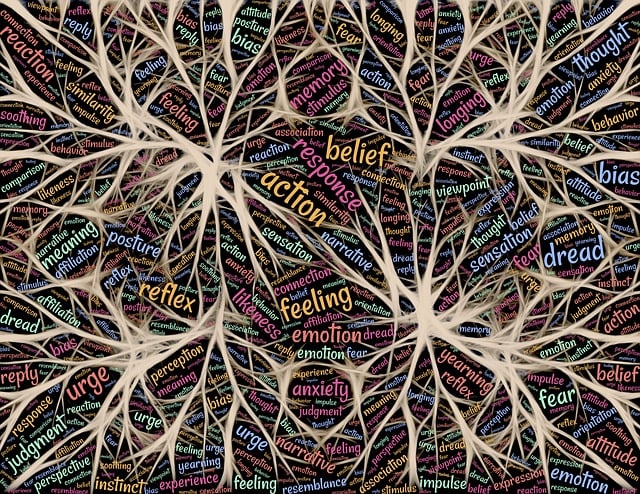
The brain can also establish new routes from new stimulii, therefore bypassing routes which have become damaged or dead, which is shown in the importance of early physio intervention in the case of many brain injuries, dementia and strokes.
With what seems like an explosion of Spectrum Disorders such as Autism and ADHD, research suggests that the behaviour which confirms a diagnosis, is caused by different "wiring" of the brain. It is not an illness but a complicated web of different signals which results in unusual and "different" behaviour.
Why should this be? Was the condition always present in societies before, with the individuals being termed as "strange", "weird", or "different" and totally misunderstood by contemporaries? Are symptoms being over diagnosed?
Within the spectrum, intelligence and creative abilities tend to be high, but relating to others is a struggle.We now acknowledge that many famous artists, musicians and mathematicians would be diagnosed as on the spectrum today, and many clearly had difficulties establishing relationships.
It is only now that these conditions of the spectrum are being recognised and receiving attention, with an overwhelming number of individuals ticking the spectrum box, including many elderly people, who have lived with their condition and constructed coping mechanisms to fit into an expected behavioural pattern.
It seems logical that for what seems like an epidemic of unacceptable behaviour which affects others in a negative way, there must be some sort of common denominator.
Prisons are full of individuals who have behaved in a "bad" way, causing harm to their fellow human beings, although it varies from country to country as to the behaviour which requires a custodial sentence, or even the death penalty.
The widespread use and easy acquisition of mind altering chemical drugs, including alcohol, is often linked to behavioural problems and it should not be under estimated.
From a much less considered stance, I have often sited the vast useage of chemicals facing us in the world today. We are surrounded by them on a daily basis, we breathe them in, we absorb them into our bodies and we eat and drink them, not forgetting the ingestion of medications.
The brain with its tiny branches which controls everything we do, is highly sensitive.
Is it not possible for the brain to be influenced by constant chemical contact, to alter the signals which are sent around the body?
Could it explain why someone from a "normal" background may choose a life of crime, compared to someone from a very "deprived" background who becomes a respected pillar of society, all because the brain cells have been altered?
Much has been said about the vaccination effects post Covid, where many people blame the vaccine for altering aspects of their lives, from poor mobility to depression, which might equate to chemical damage to the brain.
The jury is out on all things behaviour related, and studies are constantly being carried out all over the world.
To date there has been no definitive conclusion, but it is awaited with interest, as many questions remain unanswered .
