BLOG CORNER: DO GRADUATES KNOW HOW TO WORK?

Gaining a university degree is a huge achievement for both the recipient and for the pride felt by their parents and siblings.
Often it may be the first time anyone from the family will have reached that educational pinnacle, so it is a huge cause for celebration.
However, is everyone suited for academic study, and are graduates equipped for the working world at large? The answer very often is "No".
I was therefore pleased to learn that the "new" further education thinking is at last embracing an alternative to the traditional university degree route.
Degree education is very valuable, and should not be undermined or underestimated, but many feel a degree should be reserved for particular careers and treated in a more responsible way.
University education was at one time mainly reserved for those who came from "privileged" backgrounds, and of course one had to have reached the required entrance qualifications.
Typically, it included professions such as medicine and law which were seen as difficult, intricate courses requiring years of intensive study and practice.
Because of this system, many promising students fell through the net, as they didnt have the opportunity, or couldn`t afford university education.
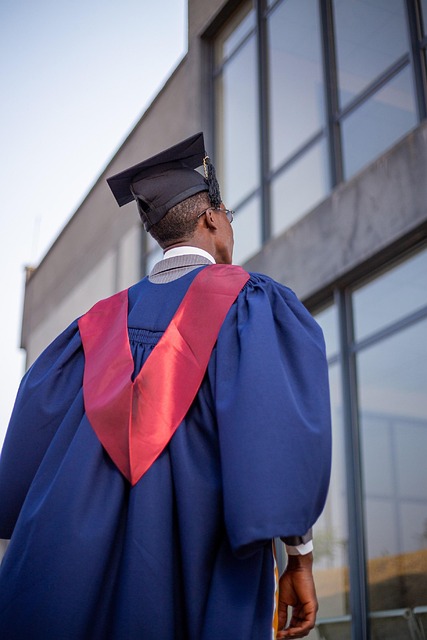
Things have changed, and going to university is much more accessible for everyone, and so it should be.
However, it is so accessible, that it is now almost expected that students will strive for an academic course from a bewildering number of subjects, and herein lie the problems.
On the one hand, many of the degree programmes are in subjects which may never lead to a job, whilst at the same time, industry, business and employers are crying out for employees. These courses still leave the student with a large debt to repay, which is difficult if employment is hard to find.
On the other hand, employers are finding that some graduates are applying for jobs, or may even start a job, but have little idea of how to work and apply their knowledge.
They have no previous experience, and find it hard to fit in and understand the expectations of the work place.
At the same time, they view their degree as a mark of superiority against non graduate employees, and feel they should be given senior roles which require responsibility and depth of knowledge.
It may be seen by some as eating humble pie, but a sensible option of practical learning in the place of work , which builds up to form experience, is a win win situation for all concerned.
It gives the student employee a chance to learn at the coal face, so to speak, earn some money and be an asset to the employer.
University input can still be available alongside, with day or block release, which relates to the chosen profession, and a degree can still be achieved, but it makes much more sense from a job, employer and employee perspective to run practical real life working as part of the journey.
It also suits individuals who feel more comfortable in a practical learning environment, rather than a wholly academic one.
Since the rapid rise in graduate numbers, particularly in the more practical disciplines, there has been criticism from the general public as to their effectiveness.

Traditionalists will argue that many of these professions such as the police, nursing and journalism have become obsessed with graduates who tend to quickly gravitate to top jobs whilst having little experience, and the result appears to be gaps in the service, and in some cases, sadly a drop in quality.
There have been huge changes within these professions for all concerned, and the old models are no longer applicable due to changes in society and the advance of technology.
However, they do have a point.
Many of these professions had to start at the bottom and learn their craft bit by bit. It was hard work and took many years, but important human behaviours were learned along the way, plus they learned from experienced colleagues and other partner agencies.
This has now been largely replaced by evidence based theories, critical thinking and fast track promotions.
It is now possible to earn a degree, followed by a post graduate, and perhaps a doctrate, and then apply for a very senior role in the chosen profession, having spent little time learning the craft.
It can be compared to any artisan starting with the basics and working up until the final item reaches the standard required.
There are no shortcuts, only learning, taking advice, trial and error, research, and joining up the appropriate facts. That is not to say that experimentation and trying different ways of improving things should not be included, but should be done on a basis of retaining or improving quality of the finished article.
A popular phrase at the moment is "dont work hard, work smart". Generally it involves short cuts and technological interventions which may be acceptable once the required experience has been gained, but not before, as the results could be ill researched guessework, giving inferior outcomes and may miss out important red flags.
Many politicians fall into this category.
Typically they receive a degree in politics, join a local authority or similar until they win a political seat. They may gain a place in cabinet and have a portfolio of great importance, but have little or no practical experience of working in such an environment, or indeed with the world at large.
The country has seen better times, and it is not unfair to say that if one looks at the vital services which we all use and appreciate, many complaints are being made against them.
Is it because we are becoming more vocal in our criticisms, or are we staring inefficiencies straight in the face since inexperienced graduates have been at the helm?
It does not look as if we have benefitted from their input.
Hopefully common sense will prevail and the country can improve many aspects of its workforce which in turn will help the economy to grow.
Young people will be able to learn alongside experienced colleagues, together with some academic background, which will increase productivity and job satisfaction.
Employers will have additions to their work force who will gain experience in both how the job actually works alongside theoretical input, which makes for a much more rounded employee.
It will be interesting to see how Artificial Intelligence fits into this model.
From an economic point of view, universities are struggling to balance their books, and students are leaving with huge fees to pay.
Surely working alongside employment institutions could help share this burden, as contributions could be made to share the cost of training apprenticeships and practical learning.
There is a positive way forward for all concerned, let us hope that new learning routes will be encouraged and established for a successful future.
