Blog Corner: ARE WE AS SMART AS MOTHER NATURE?
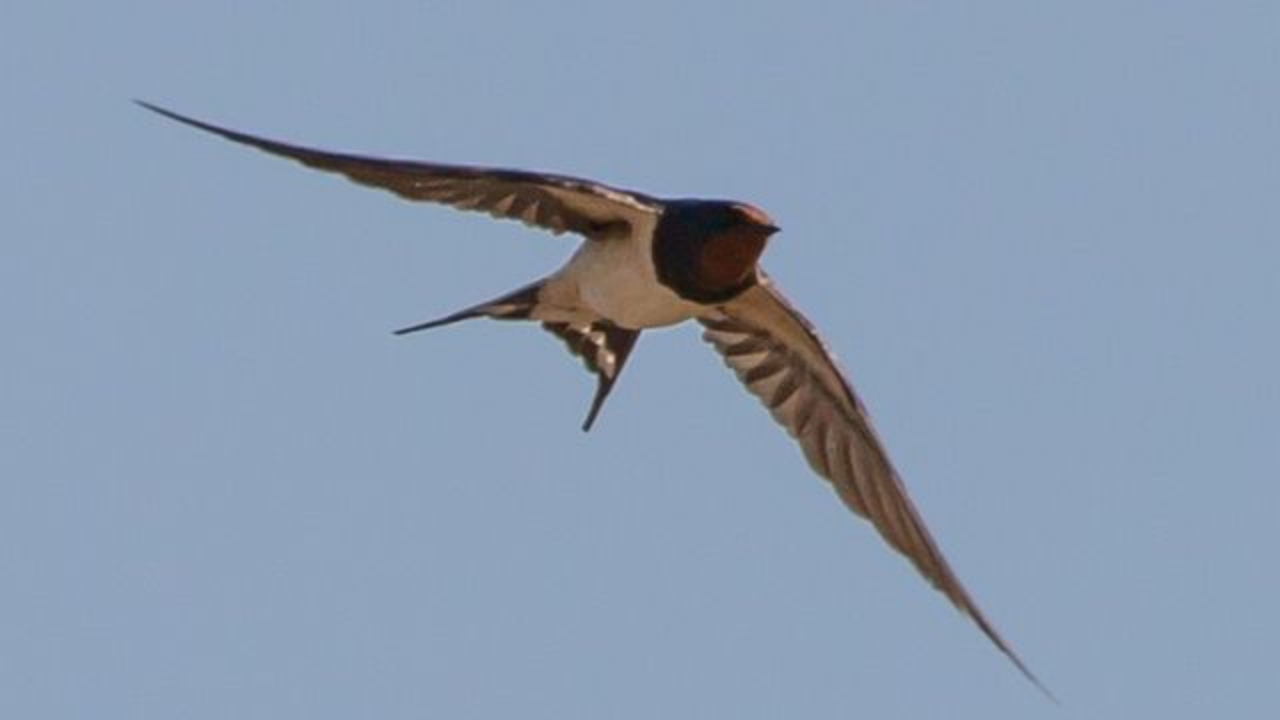
As Spring brings activity to the Natural World, we should be taking a closer look at how wild life and plant life exist and thrive.
We tend to pay so little attention to these things as many individuals live in urban areas where Nature is not particularly evident.
Those living in more rural settings, if interested enough, become more aware of Mother Nature`s seasonal circle.
As humans, we seem to need a barage of support to get through life.
We like to have family and friends, work colleagues and aquaintences to help guide us.
We rely on others to help us aquire a home, be it an expensive property or one of basic standards.
Rearing a family requires the input of many, from birth to education and beyond which requires financial support from various sources.
Material possessions are very important to the Western human, and fashions which may be started by celebrities or significant public figures are copied. This may be for reasons of status and appearances, and also requires financial input.
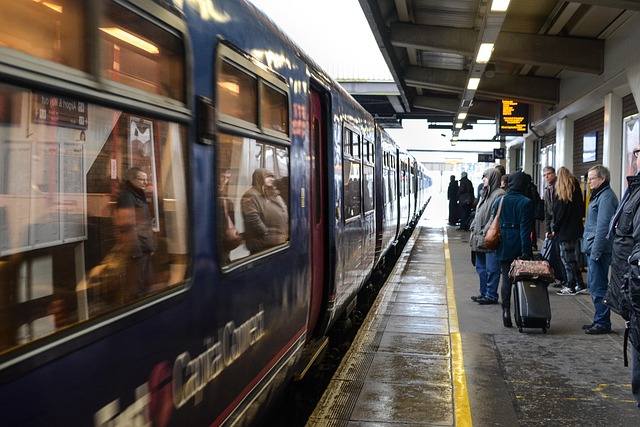
In order to get around, the human chooses various modes of transport. It may be a car, train, aircraft or bus, but is required to allow the human to access various destinations, such as work, appointments or holidays.
Even food provision requires shopping and cooking unless food is grown and eaten in its natural state.
This massive support network has grown over the centuries as humans have a very creative brain and as time has gone on, they have invented things which make life easier but not always simpler, as there always seems to be a large input behind the scenes.
As children, we learn by trial and error how to do things.
Learned behaviour is aquired by passing certain aspects of life from an adult to a child, such as safety, nutrition, comfort, warmth, identity, behavioural and social skills.
There are others such as religion, family and cultural values and how to relate to others.
Many of these core values have been passed down through generations and can have a vey profound effect on young people.
However, due to social change, many other values shift over the years and what was once perhaps unacceptable can become the norm.
Compare this complicated mix of human learning against that of the Natural World.
Most non human living things are very self sufficient.
They appear to give birth, (unaided), establish survival and safety, find a suitable environment and nutrition to grow and reproduce with similar species.
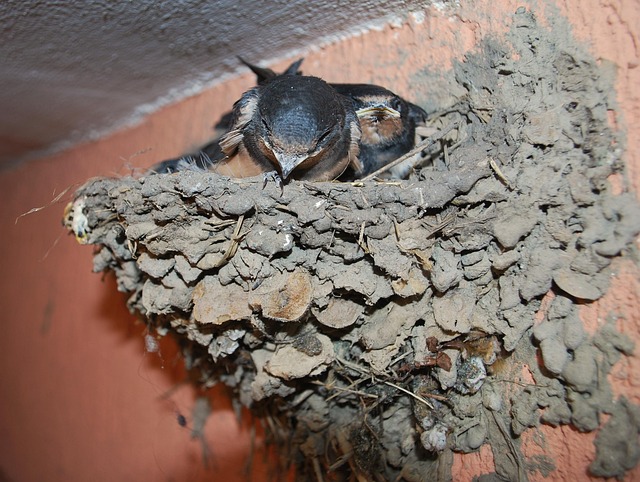
An example of self sufficiency is the yearly cycle of the swallow.
This small bird spends time both in the U.K. and in Africa.
Travelling between these two countries is a feat in itself, and is quite mind boggling as the obstacles and distances can be many and great.
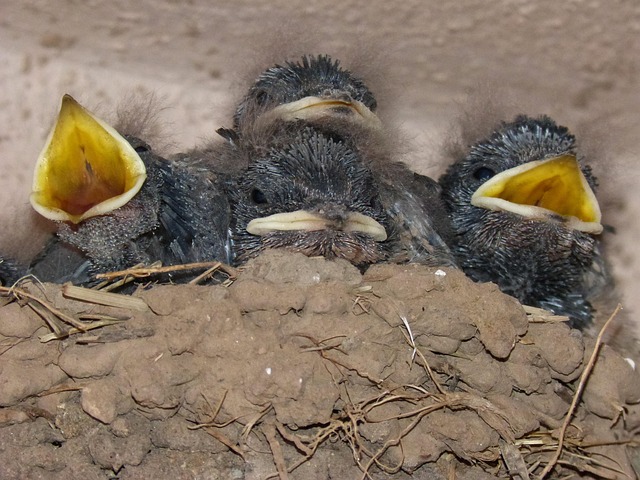
The swallow arrives in the U.K. around April / May, builds an amazing nest, finds a mate and lays eggs in order to hatch its young.
In the space of a few months, the parent swallows will teach the young to survive, feed and grow strong. They will learn to fly under strict supervision as they have a long journey ahead of them.
As life changes in the U.K. countryside, the swallow community has found that many of the traditional nesting places are disappearing, so they are having to explore new nesting sites or leave the area.
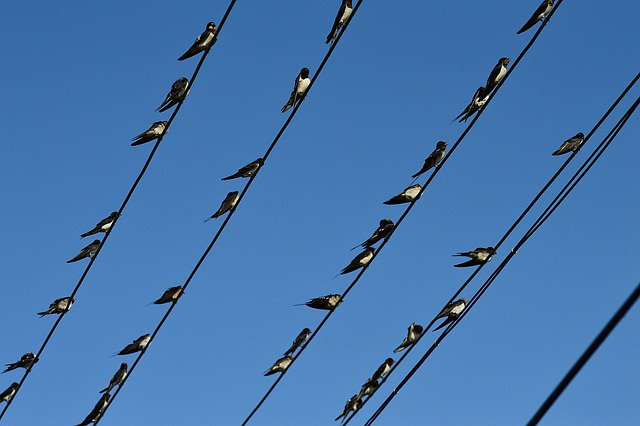
In the autumn, the swallows line up on telegraph wires and perfect their flying skills before making the epic and dangerous journey back to Africa.
Through most of this process, the swallow is self sufficient.
There are many other swallows of course and they will communicate with each other as a community, but basically most of the annual cycle is done independently.
If nothing else, it shows how the Natural World has the ability to rely on in built senses which they continue to use.
The swallow depends on its senses when negotiating the treacherous journey between the U.K. and Africa.
Humans have senses too, but over the years have allowed many of them to diminish, as have depended on more artificial ways to deal with life.
I have used the swallow as a good example of self sufficiency and learned behaviour along with the use of the senses, but the same applies to the plant kingdom and to most wild, marine and insect life, some of which we are familiar with and some we are not.
Plants do not appear to be mobile or vocal to us as individuals, but they have their own way of expressing themselves.
Mobility is seed dispersal and growth, vocal is the suitability of the environment and how well the plant thrives.
Next time you have a chance to be in a garden or woodland or able to watch birds nesting and teaching their young, compare it to our own lifestyles which require such complicated support from others.
We may not be as smart as we think!
